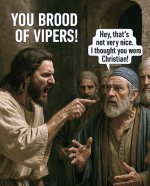
Confessions of a Reluctant Catholic

annabenedetti

like marbles on glass
Thinking today, about the past years in which I've been a reluctant Catholic. About how maybe "reluctant Catholic" was a good enough way to describe it, and then wouldn't you know, it's already out there, findable in a search, written about in a way that comfortably fits and better describes being a reluctant Catholic than what I could've done. So here she is, Alice McDermott. It's very long, so here's a little bit, but it's enough.

Also: This is for anyone who wants to understand how a lot of Catholics believe. Who doesn't understand why we do. So I'm not gonna spend time arguing Sola Scriptura. This is for the curious, it's not for the haters.

Confessions of a Reluctant Catholic


... And I, after years of semi-indifference, occasional rejection, political objection, and unshakable associations (no other cure for a sleepless night than a rosary counted off on your fingers, no better solace for unnamed sorrows than a candle lit in an empty church), find myself at middle age a practicing Catholic. A reluctant, resigned, occasionally exasperated but nevertheless practicing Catholic with no thought, or hope, of ever being otherwise.​
I must confess (it’s a genetic thing, no doubt) that it occurs to me that it doesn’t bode well for our church at this millennium to have the likes of me as any kind of standard-bearer, and I offer this account of my own religious history only because it strikes me that it is similar to the religious history of many of us now middle-agers born into the Catholic faith. I offer you my own religious evolution not because it illustrates a triumph of faith but because it provides, perhaps, a place from which to talk about what brings us back, what leads us middle-aged born Catholics finally to choose the faith we were given from the very first moment of our lives. To a church we have, at various times in our lives, seen as flawed, irrelevant, outdated, impossible, and impossible to leave behind. . . .​
Catholicism, I began to see, was also mine, inextricably mine, the fabric of my life and my thoughts. It was the native language of my spirit, the way in which I had from the beginning thought about faith. And while I could acknowledge that there were indeed other languages for faith and that it may well be that those languages were more effective, less burdened by nonessentials, perhaps even superior to the language the Catholic church had provided me, I would have to live another life entirely in order to know them and to feel them as deeply or as inevitably as I knew and felt my Catholic faith. Resignation and delight: I am a Catholic after all. My only obligation, my profound obligation, is to make the best of it. . . . .​
It is not always easy to love the church, but then again, in my experience, it is not always easy to love anyone.​
 
Last edited:

chrysostom

Well-known member
Hall of Fame
Why don't you think you love anyone? What about your family?
I have trouble separating duty and love. I'm heavy on duty. It comes first. Got it from my dad who I feared more than I loved. The family is just like the Church. I love the family but not necessarily the people. Yes, I judge people and I don't think they appreciate what they have. I like to think I do.
 

annabenedetti

like marbles on glass
I have trouble separating duty and love. I'm heavy on duty. It comes first. Got it from my dad who I feared more than I loved.

That's a lot to unpack. To think about.

What did you get from your mom?

The family is just like the Church. I love the family but not necessarily the people.

You love the ideal of family, but maybe the day-to-day reality of family relationships doesn't match the ideal?

Yes, I judge people and I don't think they appreciate what they have. I like to think I do.

Do you appreciate the family you have?
 

chrysostom

Well-known member
Hall of Fame
That's a lot to unpack. To think about.

What did you get from your mom?


You love the ideal of family, but maybe the day-to-day reality of family relationships doesn't match the ideal?


Do you appreciate the family you have?
My mom was a saint and If I were to love anyone, she would be first. She died of cancer at 55.
I do appreciate the family that I have. It is not as religious as I would like but I think that is my fault. For the longest time keeping my family together was more important than religion. The best thing that happened to us was moving away from the old families where we could grow without a lot of distractions. It was John Paul the Great that got me back to the Church.
The family and the Church are both ideal concepts without a single ideal person.
 

annabenedetti

like marbles on glass
My mom was a saint and If I were to love anyone, she would be first. She died of cancer at 55.

I remember that now. That you said your mom was a saint. I'm sorry you lost her so young.

I do appreciate the family that I have. It is not as religious as I would like but I think that is my fault. For the longest time keeping my family together was more important than religion. The best thing that happened to us was moving away from the old families where we could grow without a lot of distractions. It was John Paul the Great that got me back to the Church.

It's always seemed that you do. You've talked many times about traveling to see the family on holidays, you've said how wonderful grandkids are, I'd remember more that you said, if it hadn't been such a long time ago. It sounds like you worked hard to make your family a family, that's no small thing. Sometimes yes, moving helps. There's only so much you can do after your kids are grown. They have their own relationship (or not) with God. You could've laid the best groundwork, and still, you have no control.

The family and the Church are both ideal concepts without a single ideal person.

I don't think ideal is the same as perfect. Maybe there have been a lot of ideal people. Like your mom.

Maybe sometimes people miss the ideal because they were looking for the perfect.
 

Derf

Well-known member
My mom was a saint and If I were to love anyone, she would be first. She died of cancer at 55.
I do appreciate the family that I have. It is not as religious as I would like but I think that is my fault. For the longest time keeping my family together was more important than religion. The best thing that happened to us was moving away from the old families where we could grow without a lot of distractions. It was John Paul the Great that got me back to the Church.
The family and the Church are both ideal concepts without a single ideal person.
It's easy to love the ideal person, since he doesn't exist. But if we don't love anyone, what kind of Christian are we?
 

Derf

Well-known member
One that fears God. One that appreciates what he has. One that doesn't appreciate those who don't.
But we’re supposed to love our enemies, not appreciate them. And love our neighbor as ourselves, which has to include appreciation, doesn’t it?
 

chrysostom

Well-known member
Hall of Fame
But we’re supposed to love our enemies, not appreciate them. And love our neighbor as ourselves, which has to include appreciation, doesn’t it?
We are not supposed to sin but we do. We are supposed to love our enemies but I can't. I am still working on forgiving them.
 

Derf

Well-known member
We are not supposed to sin but we do.
And we're supposed to confess and repent when we do. Repent means stop doing the sin and do the good.
We are supposed to love our enemies but I can't.
Yes, you can, if you are a Christian...if you have the Spirit of Christ in you.
I am still working on forgiving them.
That's part of loving them. But do you forgive first before you love them, or vise versa? What is it to love your enemies? Or neighbors for that matter? "Do good to them that hurt you." If you can't start with forgiving, start with doing good to them.
 

chrysostom

Well-known member
Hall of Fame
And we're supposed to confess and repent when we do. Repent means stop doing the sin and do the good.

Yes, you can, if you are a Christian...if you have the Spirit of Christ in you.

That's part of loving them. But do you forgive first before you love them, or vise versa? What is it to love your enemies? Or neighbors for that matter? "Do good to them that hurt you." If you can't start with forgiving, start with doing good to them.
I think you have to first love yourself.
 

Idolater

Popetard
I have trouble separating duty and love. I'm heavy on duty. It comes first. Got it from my dad who I feared more than I loved. The family is just like the Church. I love the family but not necessarily the people. Yes, I judge people and I don't think they appreciate what they have. I like to think I do.

Love is wishing good or willing the good for people. We have a duty to not hate. You sound like you're lacking the emotion you expect to experience toward people but love is an act of will, not a feeling. If the feeling happens, all the better, as it appears it is happening for you toward your family as an institution, and as you do toward the Church as a body.
 

Idolater

Popetard
We only have to love them as much as we love ourselves.

Love is willing the good. You wish them well. That's love.

Wishing someone evil is hatred. You have a duty to avoid hatred. It doesn't matter what you feel, you cannot wish someone evil. If you have a problem with wishing someone evil that's a serious problem that you should go to confession about, for the exorcism.
 

Idolater

Popetard
Love is willing the good. You wish them well. That's love.

Wishing someone evil is hatred. You have a duty to avoid hatred. It doesn't matter what you feel, you cannot wish someone evil. If you have a problem with wishing someone evil that's a serious problem that you should go to confession about, for the exorcism.

That means you have a demon. And if you don't believe in demons, go to confession anyway. And do the penance. With any luck it'll be some combination of Hail Mary's and Our Father's.

The trick is that you literally have to confess guilt, even though you didn't do it on purpose, you just have a problem, you're doing what you don't want to do, which is something the Apostle Paul talked about frequently. So to get the exorcism, you need to be penitent, which means confessing guilt. That's literally the hardest part of confession, is admitting guilt, pleading guilty basically, to a greater crime. You're basically confessing to mortal sin when you go to confession, although for sure the Catechism teaches you can confess your light sins (venial sins), and even endorses the practice. But when you're confessing to wishing evil of others, that's grave matter, that's hatred.

So do you hate with full knowledge and deliberate consent? because that's what it has to be to be mortal sin. If it's not with full knowledge and deliberate consent, you have to confess the sin anyway, because that's what you're there to do, is get that exorcism, that you need, because that's what the problem of hatred is telling you objectively, it's that you're currently getting a diabolic onslaught, and you could use the exorcism, which is like a nuclear bomb in the spiritual war.

Just get all those niggers¹ outta there. (Demons, ofc.)


¹ “ Ignorance
Disrespect
Aggressiveness
Entitlement
Laziness
Defiance
Cynicism
Materialism
Entitlement Mentality
Narcissism
Bigotry
Apathy
Selfishness
Oppositional Defiance
Cynical Worldview
Materialistic Attitude
Disdain
Hostility
Social Isolation
Prejudice

“ It's crucial to note that these traits are not inherent to any group and can be found across various demographics. ”
 
Top